


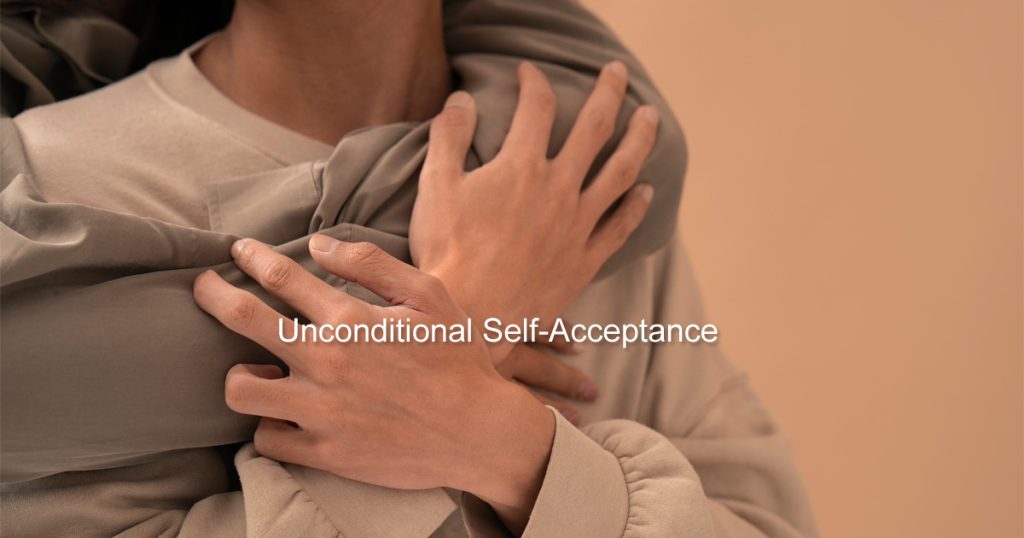
I accept myself because I am alive, because I can think, feel, and exist. I do not identify with my actions or mistakes. I have the ability to evaluate my behaviors and characteristics, but my entire existence is so complex that it cannot be reduced to a simple “score.”
I pursue my goals to enjoy life more—not to prove that I am worthy. Even if I fail, that doesn’t make me a “failure.” My worth as a human being does not depend on results, praise, or criticism.
If you base your value on success, then every failure threatens to shake your self-image. If you depend on others’ approval, then your mood will rise and fall based on the opinions of people who may not even truly know you.
A person’s worth is not a measurable quantity. It is not defined by titles, degrees, wealth, or the opinions of others. It is inherent and inalienable—it arises from the fact that we are conscious beings, each unique in the richness of human diversity.
Why Should I Not Judge Myself?
Albert Ellis emphasized that generalized self-evaluation is flawed for the following reasons:
- It’s Overgeneralization
Our self is made up of countless experiences, thoughts, emotions, and behaviors. How can something so complex be summed up with a simple label like “good” or “bad”?
- The Self Is Constantly Changing
Every day, we learn, evolve, and do new things. A fixed self-assessment cannot capture this dynamic nature.
- The Need for Self-Affirmation Traps Us
If self-esteem depends on comparison with others or constant success, it becomes fragile. When we don’t meet expectations, our self-image is threatened.
- Constant Evaluation Leads to Psychological Disturbance
Trying to constantly prove your worth often causes anxiety, fear of failure, and even procrastination. Instead of helping you, it eventually hinders your ability to function effectively.
From Criticism to Acceptance
Instead of trying to evaluate ourselves as a whole, we can:
- Evaluate specific behaviors (e.g., “I wasn’t as prepared as I would have liked”) without generalizing (“I’m a failure”).
- Learn from experiences without interpreting them as proof of personal value or worthlessness.
- Treat failure as a natural part of the human experience, not as a defining part of our identity.
Reflective Questions
When you’re being harsh on yourself, ask:
- “Am I, as a person, equal to just one behavior?”
- “How fair is it to equate one moment with my entire worth?”
- “What would I say to a friend who was in my position?”
- “How can I evaluate my behavior honestly without diminishing my worth as a person?”
– If someone saw me only in this moment, would they get the full picture of who I am?
The answer is almost always no. You are something much greater and more complex than any single action—no matter how good or bad it may be.
Exercises to Cultivate Acceptance
- Thought Journal: Record instances where you judge yourself negatively and reframe those judgments into neutral observations.
- Alternative Statements: Instead of saying “I’m a failure,” say “I didn’t succeed in what I wanted this time.”
- Value Reminders: Repeat a daily affirmation of acceptance, such as “I have worth because I exist—not because I succeed or fail.”
- Self-Compassion: Speak to yourself as you would to someone you love and support.
Your worth does not increase or decrease based on your successes or failures.
You can aim high, learn from your mistakes, and grow—without needing to prove your value.
This is the foundation of Unconditional Self-Acceptance: the understanding that we have worth simply because we are human.